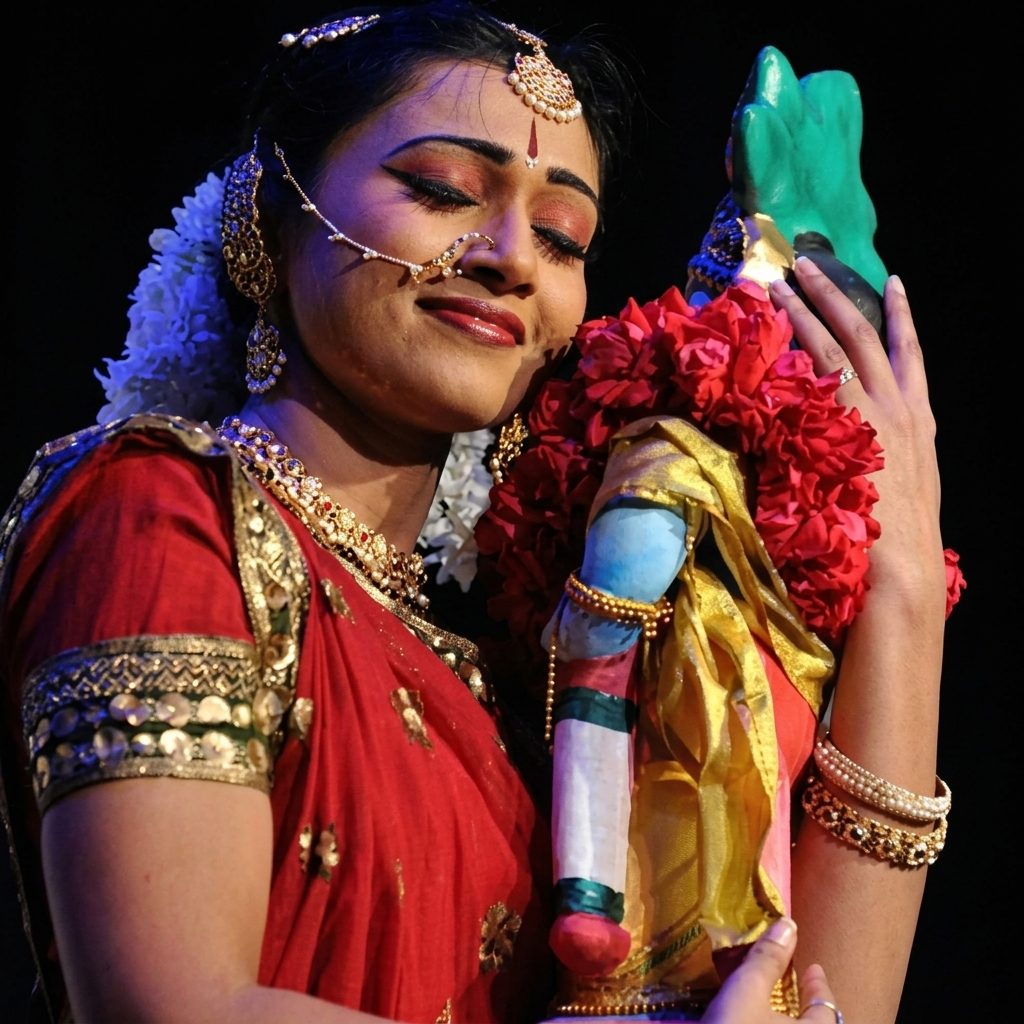
The Last Guru of a Dying Tradition
At 82, Guruji holds the lineage of a rare Kuchipudi style that Echoes of India is racing to document — before it exists only in photographs.
Of the estimated 40 Kuchipudi masters alive in 1990, fewer than 12 remain active today. Documentation cannot wait.
His hands move even when he is explaining something — an involuntary mudra, a half-formed gesture that escapes the wrist before he catches it. At 82, Guruji has been making these movements for seventy years. They are more native to his body than walking.
His full name is rarely used. In the Kuchipudi community of Andhra Pradesh, he is simply Guruji — a title that carries more weight than any name could. He learned from his father, who learned from his father, a lineage that traces back to the sixteenth-century founder of the Kuchipudi tradition itself, Siddhendra Yogi.
What makes Guruji's style unusual — and its loss catastrophic — is the specific vocabulary of movements he carries. Most modern Kuchipudi has been standardised, smoothed into a form teachable in studios and certifiable by academies. Guruji's style is pre-standardisation: rawer, older, full of idiosyncratic inflections that no textbook contains and that were never meant to be written down.
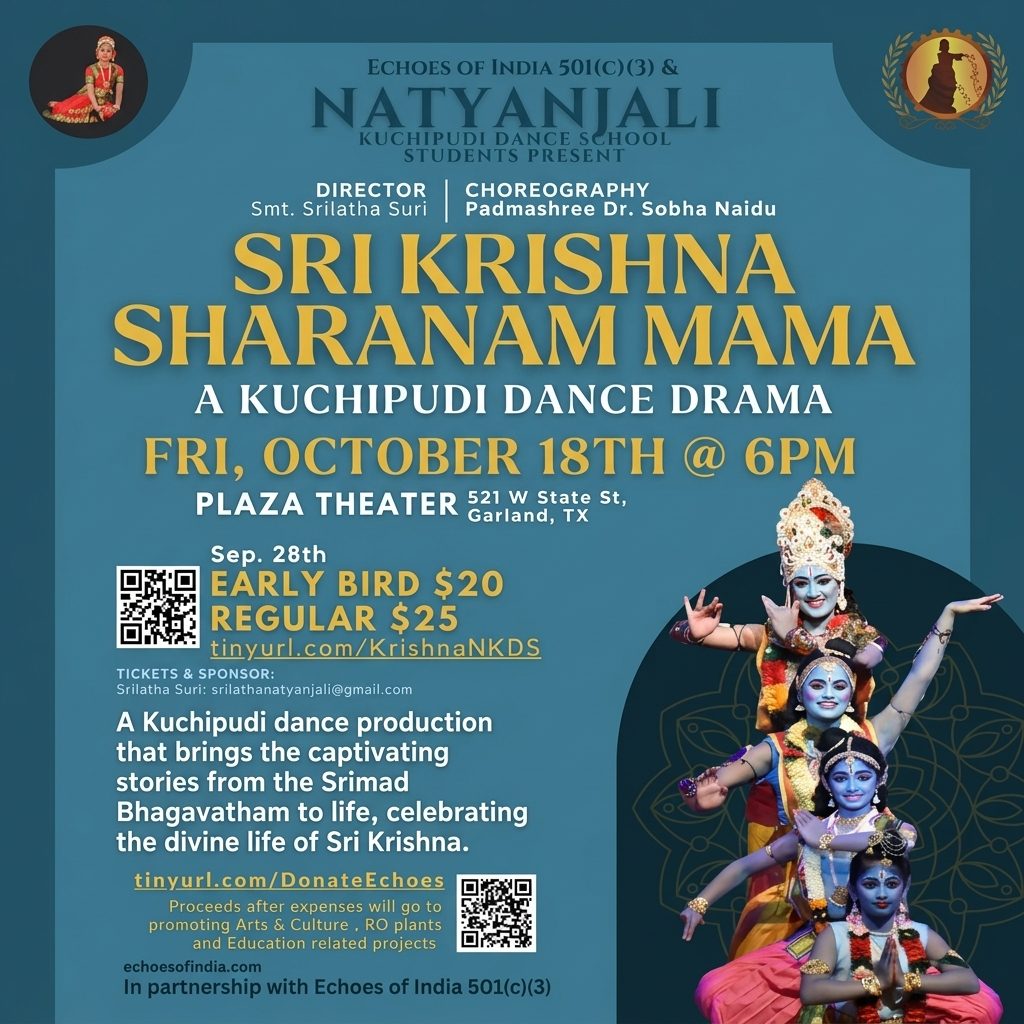
Sri Krishna Sharanam Mama — one of the compositions Guruji taught Echoes of India to preserve.
“My students never wrote anything down. You learn by watching. You carry it in your body or you do not carry it at all. That is how it has always been.”
— Guruji, Kuchipudi Village, 2022
The problem with oral-embodied transmission is its fragility. It requires an unbroken chain of bodies — guru to shishya, each generation absorbing what the previous one carries. When that chain breaks — by illness, by death, by diaspora, by a generation that chose other professions — what was carried disappears. Not archived. Not lost to fire or flood. Simply gone, because no one remains who remembers.
Echoes of India began working with Guruji in 2022 as part of the Heritage Documentation Project. Over twelve sessions, they filmed over forty hours of teaching — compositions, commentary, demonstration, conversation. He spoke about what each gesture means, why certain rhythmic cycles are used in certain moments, which raga suits which season of a narrative. It was, in the words of the project lead, "like watching a library catalogue itself."
Racing Against Time
What Would Have Been Lost
Tarangam variations
Only 3 practitioners remain who know the full tarangam sequence as Guruji performs it
Oral compositions
17 compositions exist only in Guruji's memory — never written, never filmed until now
Abhinaya nuances
Subtle facial expression cues passed directly from guru to shishya for 200 years
Telugu poetic forms
The underlying padam texts use archaic Telugu that few scholars can fully translate
What Was Preserved
40+
Hours of video
17
Compositions filmed
8
Teaching sessions
When the filming concluded, Guruji sat quietly for a moment. Then he said, in Telugu: "Now at least the grandchildren can learn. Even the ones who never met me."
That is the gift of the Heritage Documentation Project. Not a museum. Not a memorial. A living archive that future students can sit with, watch, and learn from — even after the last guru of this tradition has taken his final bow.
End of story
This story is part of our
Heritage Documentation Project
Your donation directly funds the filming, travel, and archival processing that preserves these lineages.
Your Dollar Sustains
an Artist & Saves a Life
Every donation to Echoes of India fuels two vital missions. You preserve a 2,000-year-old art form while delivering clean water to families who need it most.