The Village That Forgot What Clean Water Tasted Like
Fluoride poisoning had silently stolen health from three generations. One water plant changed everything.
3
Generations
affected by fluorosis
4,000
Residents
served by the new plant
18
Months
from proposal to inauguration
What is fluorosis?Excess fluoride in groundwater causes skeletal and dental fluorosis — irreversible joint damage, mottled teeth, and stunted growth. It is endemic to rural India's hard-rock aquifers and largely invisible to policy-makers.
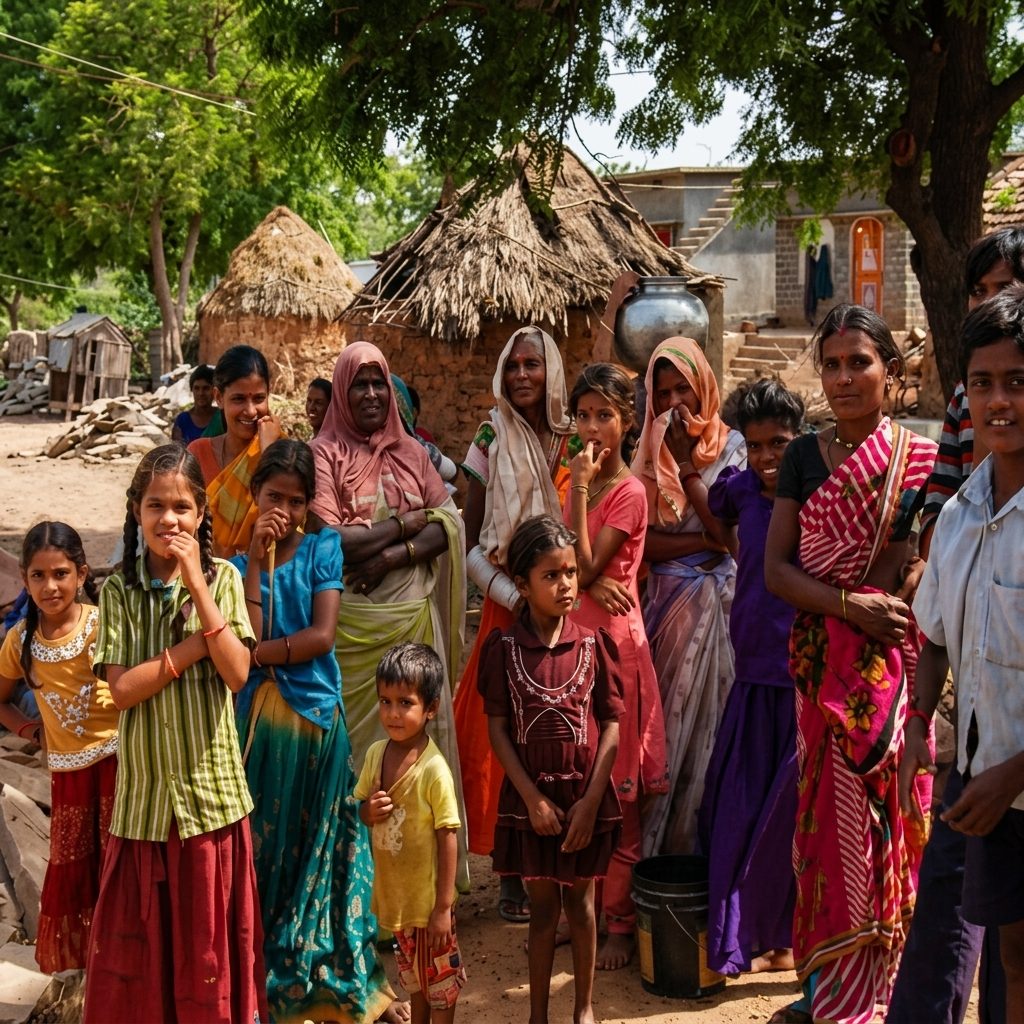
Gurampadutanda is a village you will not find on most maps. It sits in the Nellore district of Andhra Pradesh, population roughly 800, and for most of living memory its water has tasted of metal.
The fluoride came from the rock. The region's geology forces groundwater through fluorite-rich granite, leaching the mineral into every well and handpump. At concentrations of 3–5 mg/L — three to five times the WHO safe limit — fluoride begins its quiet destruction: chalky teeth, aching joints, and eventually the "Andhra stoop" that marks an older resident who drank this water for decades.
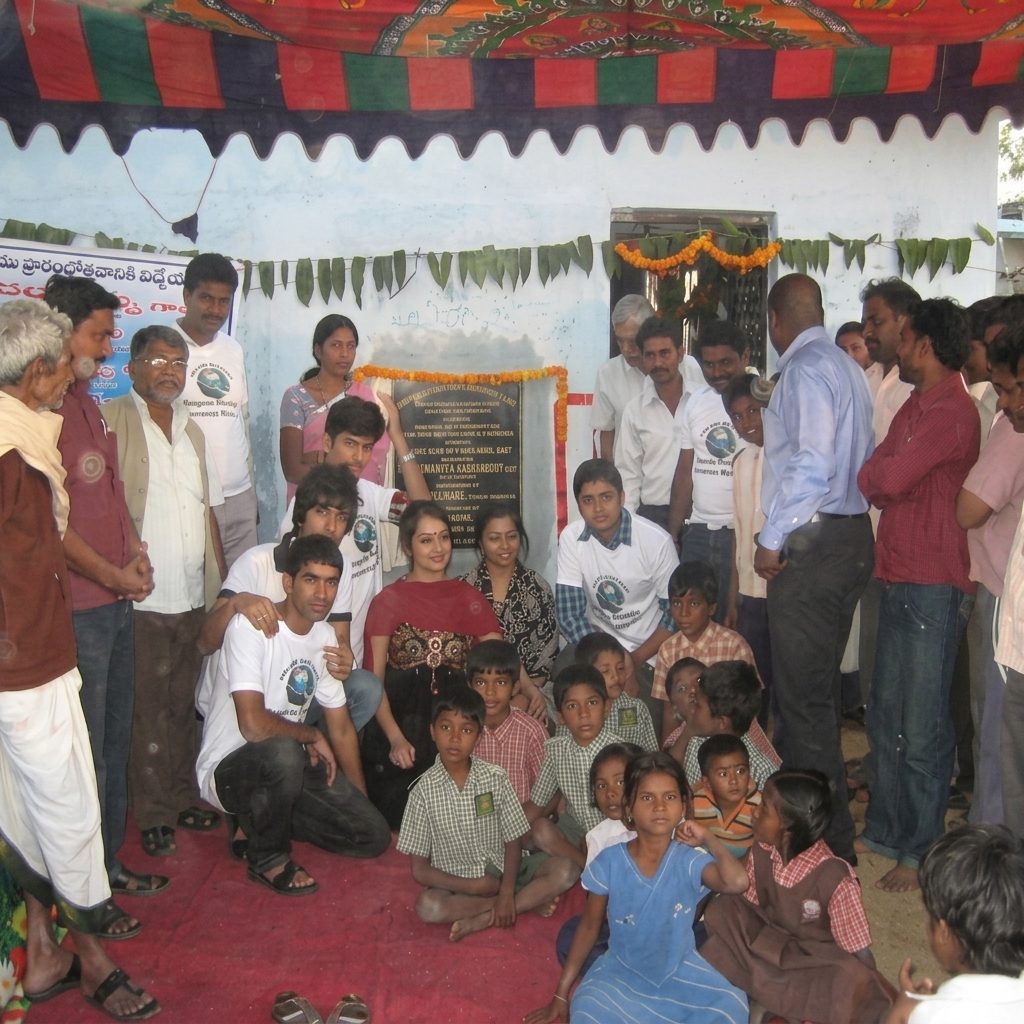
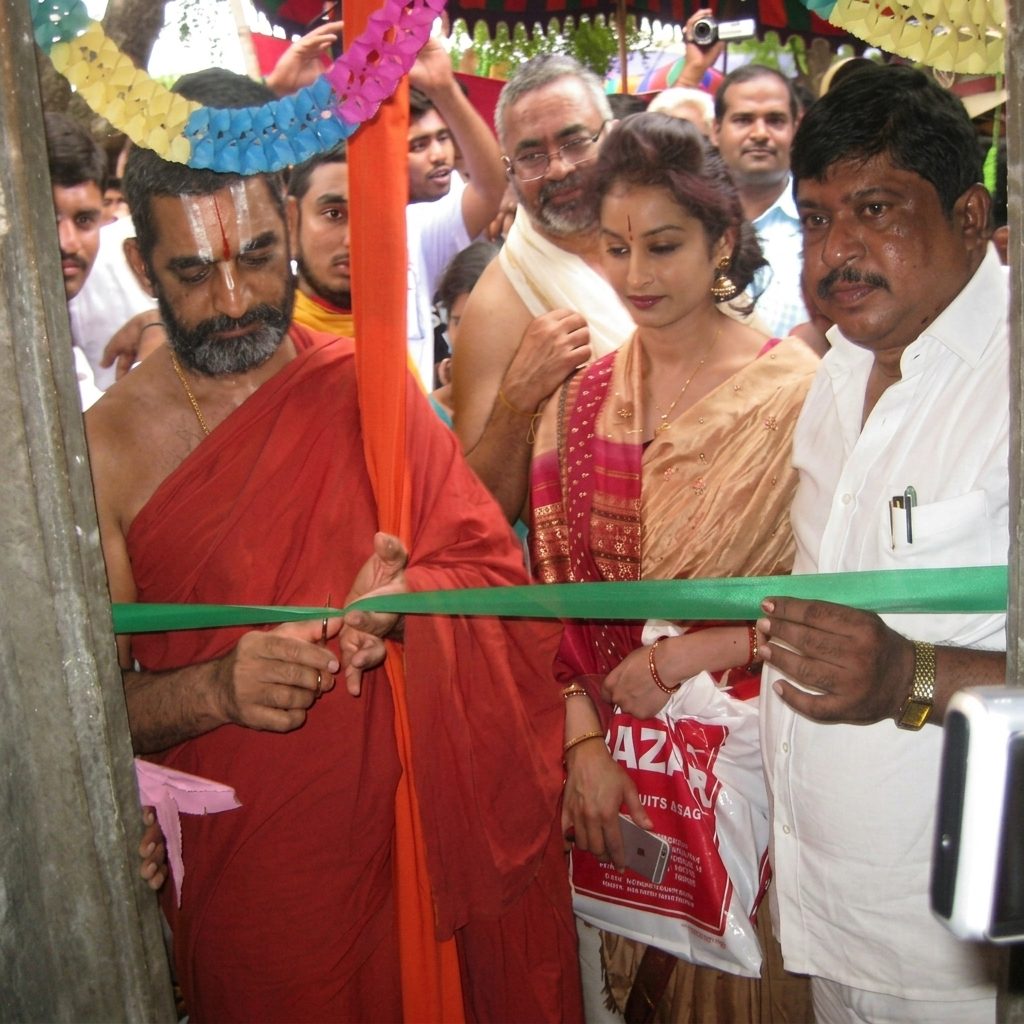
Inauguration day — the entire village turned out for the ribbon cutting.
When Echoes of India first surveyed the village in 2014, they found a community that had simply normalised suffering. Mothers described their children's mottled teeth as "the way teeth are here." Elders with crooked spines believed it was simply age. Nobody connected it to the water.
“For the first time in my life, I gave my grandchildren water and I was not afraid.”
— Village elder, Gurampadutanda, 2016
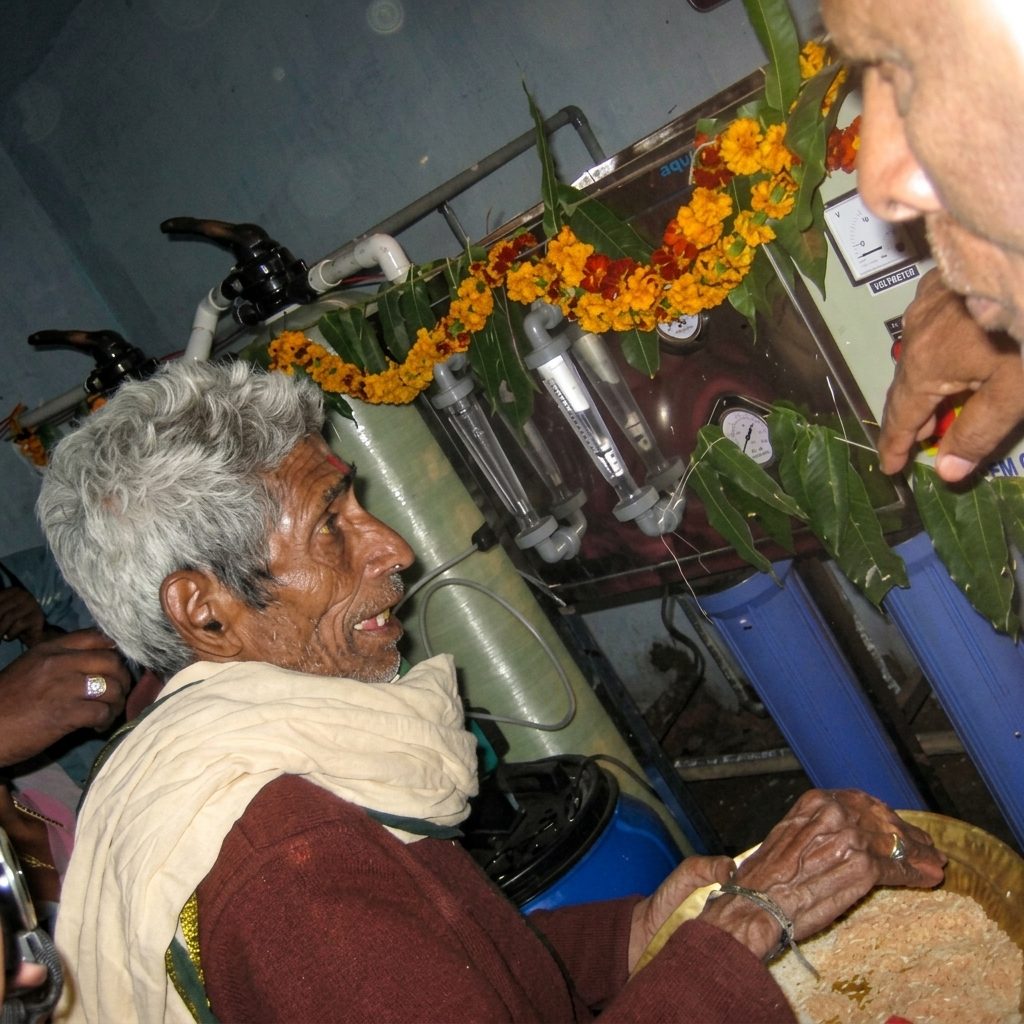
The solution Echoes of India installed is a community-scale defluoridation plant — a Nalgonda-process system that uses aluminium sulphate and lime to precipitate excess fluoride out of the water before distribution. The plant treats 20,000 litres per day and distributes it through a network of seven standpipes across the village.
Eighteen months elapsed between the first survey and the inauguration day. In that time, a local committee was trained to operate and maintain the plant. A corpus was established so that chlorine tablets and filter media could be purchased locally, without depending on external donors. The goal, always, was that the village would not need Echoes of India indefinitely.
4,000+ residents now drink safe water daily
Fluoride levels reduced from 4.2 mg/L to 0.6 mg/L
Plant has operated without interruption for 8+ years
Zero new fluorosis cases reported since 2017
Eight years on, the plant runs. The children's teeth are white. The village has begun sending representatives to neighbouring communities to explain what can be done — a quiet form of peer-to-peer advocacy that no development manual foresaw.
There is a Gurampadutanda child who was born the year the plant opened. She has never tasted metal-tinged water. She has no idea what her grandparents endured. That ignorance — that blissful, healthy ignorance — is exactly what Echoes of India was built for.
End of story
Your Dollar Sustains
an Artist & Saves a Life
Every donation to Echoes of India fuels two vital missions. You preserve a 2,000-year-old art form while delivering clean water to families who need it most.